
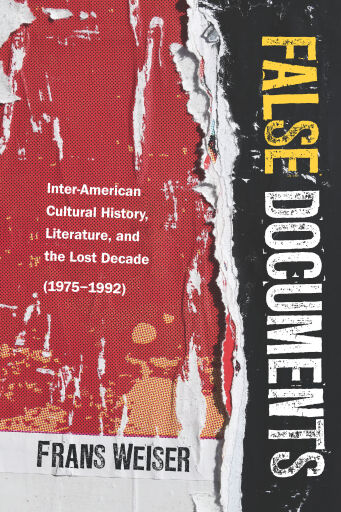
False Documents
Por Weiser, Frans
Publicado por Ohio State University Press
Disponível em 13 livrarias
 Association of University Presses - Tienda FILUNI
🇺🇸
Visitar loja →
Association of University Presses - Tienda FILUNI
🇺🇸
Visitar loja →
 Bajalibros Argentina
🇦🇷
Visitar loja →
Bajalibros Argentina
🇦🇷
Visitar loja →
 Bajalibros Latam
🇺🇸
Visitar loja →
Bajalibros Latam
🇺🇸
Visitar loja →
 Bookshop Uruguay
🇺🇾
Visitar loja →
Bookshop Uruguay
🇺🇾
Visitar loja →
 Catademic
🇺🇸
Visitar loja →
Catademic
🇺🇸
Visitar loja →








Sobre este livro
Disponibilidade
False Documents está disponível como eBook em 13 livrarias online. Entre as livrarias que o vendem estão Association of University Presses - Tienda FILUNI, Bajalibros Argentina, Bajalibros Latam.
- Idioma
- English
Perguntas frequentes
- Em quais formatos False Documents está disponível?
- False Documents está disponível como eBook em 13 livrarias online.
- Onde posso comprar False Documents?
- Você pode comprar False Documents em Association of University Presses - Tienda FILUNI, Bajalibros Argentina, Bajalibros Latam. Compare todas as opções na lista desta página.
Avaliações e resenhas
Ainda não há avaliações. Seja o primeiro a resenhar este livro.
Entrar para avaliar e resenhar este livro.
Você também pode gostar

Memorias de una isla
Casey, Calvert

Las aventuras de los héroes gemelos
Ak'abal, Humberto

El Códice mendocino: nuevas perspectivas
Fernández-Salvador, Carmen, Tejada, Jorge Gómez, Domenici, Davide, Grazia, Chiara, Buti, David, Cartechini, Laura, Rosi, Francesca, Gabrieli, Francesca, Lladó-Buisán, Virginia María, Romani, Aldo, Sgamelloti, Antonio, Milani, Constanza, Benfield, B. C. Barker, Magaloni, Diana, Miller, Mary E., Brittenham, Claudia, Berdan, Frances F., Mundy, Barbara E., Bleichmar, Daniela, Olson, Todd P., Harwood, Joanne, Sun, Lucien

The Panama Canal
Haskin, Frederic J.

A viajante inglesa, o senhor dos mares e o Imperador na Independência do Brasil
Priore, Mary Del

CHE GUEVARA: El Diario
Guevara, Che