
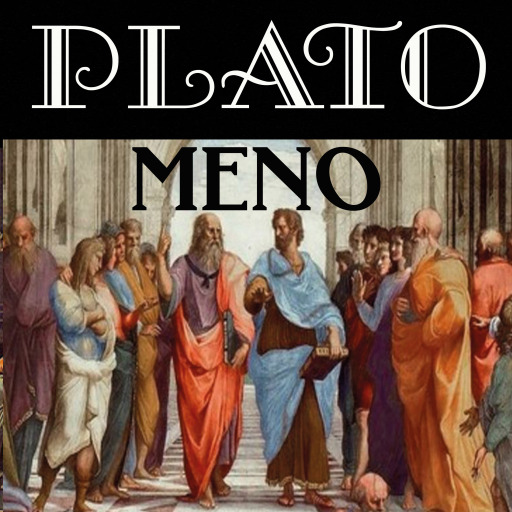
Meno
Por Plato
Publicado por Strelbytskyy Multimedia Publishing
Disponível em 12 livrarias
 Bajalibros Latam
🇺🇸
Visitar loja →
Bajalibros Latam
🇺🇸
Visitar loja →
 LORANCHBOOKSTORE
🇺🇸
Visitar loja →
LORANCHBOOKSTORE
🇺🇸
Visitar loja →
 Ebooks Librería Carlos Fuentes
🇲🇽
Visitar loja →
Ebooks Librería Carlos Fuentes
🇲🇽
Visitar loja →
 Viubux
🇲🇽
Visitar loja →
Viubux
🇲🇽
Visitar loja →
 ebooks libreria española
🇪🇨
Visitar loja →
ebooks libreria española
🇪🇨
Visitar loja →
 Bajalibros Argentina
🇦🇷
Visitar loja →
Bajalibros Argentina
🇦🇷
Visitar loja →
 Alpha Books
🇨🇴
Visitar loja →
Alpha Books
🇨🇴
Visitar loja →
 Sanborns Ebooks
🇲🇽
Visitar loja →
Sanborns Ebooks
🇲🇽
Visitar loja →
 ebooks Libreria del GAM
🇨🇱
Visitar loja →
ebooks Libreria del GAM
🇨🇱
Visitar loja →
 Bookshop Uruguay
🇺🇾
Visitar loja →
Bookshop Uruguay
🇺🇾
Visitar loja →
 Ebooks Yenny - El Ateneo
🇦🇷
Visitar loja →
Ebooks Yenny - El Ateneo
🇦🇷
Visitar loja →
 Crisol Ebooks
🇵🇪
Visitar loja →
Crisol Ebooks
🇵🇪
Visitar loja →
Sobre este livro
Categorias
- Idioma
- English
Você também pode gostar

Le Dernier des Mohicans
Cooper, James Fenimore

Mater familias (Un caso de Flavia Albia, investigadora romana 3)
Davis, Lindsey
The Complete Plato
Plato

Némesis
Roa, Sebastián
La casa de los sueños
Gedge, Pauline
The Ultimate Summer Read
Melville, Herman, Shakespeare, William, Wilde, Oscar, Twain, Mark, Storm, Theodor, Balzac, Honoré de, Lewis, C. S., Zola, Émile, Burnett, Frances Hodgson, Grahame, Kenneth, Stevenson, Robert Louis, Goethe, Johann Wolfgang von, Brontë, Emily, Carroll, Lewis, Flaubert, Gustave, Apuleius, Boccaccio, Giovanni, Thoreau, Henry David, Fitzgerald, F. Scott, Proust, Marcel, London, Jack, Joyce, James, Stoker, Bram, Gógol, Nikolai, Hardy, Thomas, de Cervantes, Miguel, Chopin, Kate, Eliot, George, Chesterton, G. K., Valera, Juan, Dostoyevsky, Fyodor, Wharton, Edith, Shaw, George Bernard, Howells, William Dean, Milton, John, Gibran, Kahlil, Confucius, Tolstoy, Leo, Chekhov, Anton, Laozi, Der Ling, Princess, Yeats, W. B., Xueqin, Cao, Dante, Scott, Walter, Sir, Shelley, P. B., Válmíki, Chatterjee, Bankim Chandra, Poe, Edgar Allan, Stendhal, Verne, Jules, Dickens, Charles, Sterne, Laurence, Doyle, Arthur Conan, Swift, Jonathan, Homer, Kipling, Rudyard, Conrad, Joseph, Shelley, Mary, Brontë, Charlotte, Austen, Jane, Dumas, Alexandre, Hugo, Victor, Leroux, Gastón, Nietzsche, Friedrich, James, Henry, Cooper, James Fenimore, Defoe, Daniel, Barrie, J. M., Hawthorne, Nathaniel, Lawrence, D. H., Wells, H. G., Tagore, Rabindranath, Baudelaire, Charles, Irving, Washington, Thackeray, William Makepeace, Stowe, Harriet Beecher, Baum, L. Frank, Alcott, Louisa May, Pérez Galdós, Benito, Lovecraft, H. P., Voltaire, Ibsen, Henrik, Whitman, Walt, Tzu, Sun, Hesse, Herman, Nitobe, Inazo, de la Barca, Pedro Calderón, Wallace, Lewis, Cather, Willa, MacDonald, George, Von Arnim, Elizabeth, Machiavelli, Niccolò, Aurelius, Marcus, Plato, Brontë, Anne, Keats, John, Forster, E. M., Gilman, Charlotte Perkins, Montgomery, L. M., Kâlidasa, Radcliffe, Ann Ward, Okakura, Kakuzo, Eliot, T. S., Douglass, Frederick, Turgenev, Ivan, Fielding, Henry, Natsume, Sōseki, Grossmith, George Weedon, Collins, Willkie