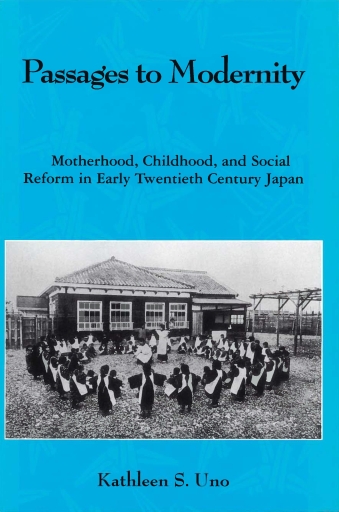
Passages to Modernity
Por Uno, Kathleen S.
Publicado por University of Hawaii Press
English
249 páginas
1999
ISBN 9780824863883
PDF
Buy at Catademic
🇺🇸
 Catademic
🇺🇸
Visitar loja →
Catademic
🇺🇸
Visitar loja →
 Bajalibros Latam
🇺🇸
Visitar loja →
Bajalibros Latam
🇺🇸
Visitar loja →
 Association of University Presses - Tienda FILUNI
🇺🇸
Visitar loja →
Association of University Presses - Tienda FILUNI
🇺🇸
Visitar loja →
 Ebooks Librería Antártica
🇨🇱
Visitar loja →
Ebooks Librería Antártica
🇨🇱
Visitar loja →
 Ebooks Agustin
🇪🇸
Visitar loja →
Ebooks Agustin
🇪🇸
Visitar loja →
 Bajalibros Argentina
🇦🇷
Visitar loja →
Bajalibros Argentina
🇦🇷
Visitar loja →
 Sanborns Ebooks
🇲🇽
Visitar loja →
Sanborns Ebooks
🇲🇽
Visitar loja →
 ebooks Libreria del GAM
🇨🇱
Visitar loja →
ebooks Libreria del GAM
🇨🇱
Visitar loja →
 Bookshop Uruguay
🇺🇾
Visitar loja →
Bookshop Uruguay
🇺🇾
Visitar loja →
 ebookskitapenas
🇬🇹
Visitar loja →
ebookskitapenas
🇬🇹
Visitar loja →
 Ebooks Yenny - El Ateneo
🇦🇷
Visitar loja →
Ebooks Yenny - El Ateneo
🇦🇷
Visitar loja →
 Crisol Ebooks
🇵🇪
Visitar loja →
Crisol Ebooks
🇵🇪
Visitar loja →
Disponível em 12 livrarias
Catademic
🇺🇸
Visitar loja →
Bajalibros Latam
🇺🇸
Visitar loja →
Association of University Presses - Tienda FILUNI
🇺🇸
Visitar loja →
Ebooks Librería Antártica
🇨🇱
Visitar loja →
Ebooks Agustin
🇪🇸
Visitar loja →
Bajalibros Argentina
🇦🇷
Visitar loja →
Sanborns Ebooks
🇲🇽
Visitar loja →
ebooks Libreria del GAM
🇨🇱
Visitar loja →
Bookshop Uruguay
🇺🇾
Visitar loja →
ebookskitapenas
🇬🇹
Visitar loja →
Ebooks Yenny - El Ateneo
🇦🇷
Visitar loja →
Crisol Ebooks
🇵🇪
Visitar loja →
Sobre este livro
<p>Contemporary Japanese women are often presented as devoted full-time wives and mothers. At the extreme, they are stereotyped as "education mothers" <i>(kyoiku mama),</i> completely dedicated to the academic success of their children. Children of working mothers are pitied; day-care users, both children and mothers, are faintly disparaged for their inadequate home lives; hired babysitters are virtually unknown. Yet historical evidence reveals a strikingly different picture of Japanese motherhood and childcare at the beginning of the twentieth century. In contrast to today, child tending by non-maternal caregivers was widely accepted at all levels of Japanese society. Day-care centers flourished, and there was virtually no expectation of exclusive maternal care of children, even infants.<br><br> The patterns of the formation of modern Japanese attitudes toward motherhood, childhood, child-rearing, and home life become visible as this study traces the early twentieth-century rise of Japanese day-care centers, institutions established by middle-class philanthropists and reformers to provide for the physical well-being and mental and moral development of urban lower-class preschool children. Day-care gained broad support in turn-of-the-century Japan for several reasons. For one, day-care did not clash with widely accepted norms of child care. A second factor was the perception of public and private policymakers that day-care held the promise of social and national progress through economic and moral betterment of the urban lower classes. Finally, day-care offered working mothers the opportunity to earn a better livelihood with fewer worries about their children. In spite of emerging notions that total devotion to child-rearing was a woman's highest calling, Japanese nationalism, a signal force in the genesis of the modern Japanese state, economy, and middle-class culture, fed a deep wellspring of support for day-care and fostered significant reshaping of motherhood, childhood, home life, and view of the urban lower classes. <br><br> <i>Passages to Modernity</i> is an important and original contribution to our understanding of the institutional and ideological reach of the early twentieth-century state and the contested emergence of a striking new discourse about woman as domestic caregiver and homemaker.</p>
Categorias
- Idioma
- English
Compartilhar
Você também pode gostar

Erfahren, was verbindet – oder trennt …
Vuran, Atilla, Weilandt, Moritz

Verfolgung, Widerstand und Selbstbestimmung
Lücke, Martin, Mangold, Anna Katharina
Trabajo Social Holístico
Pavón Rico, Patricia, Chávez, Natalia

Die menschliche Familie nach ihrer Entstehung und natürlichen Entwickelung
Hellwald, Friedrich von

Consultoria Financeira Em Gestão De Negócios
Garcia, Alexandre Violin