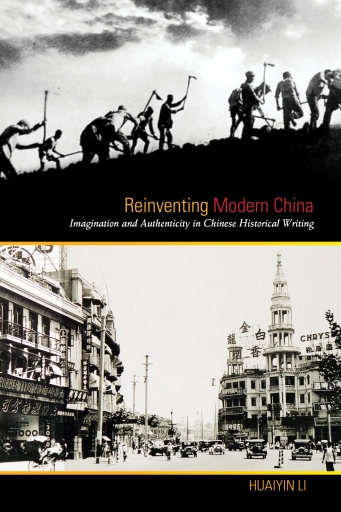
Reinventing Modern China
Por Li, Huaiyin
Publicado por University of Hawaii Press
English
354 páginas
2012
ISBN 9780824837266
PDF
Buy at Catademic
🇺🇸
Catademic
🇺🇸
Visitar loja →
UN
University of Hawaiʻi Press
🇺🇸
Visitar loja →
Bajalibros Latam
🇺🇸
Visitar loja →
Association of University Presses - Tienda FILUNI
🇺🇸
Visitar loja →

Ebooks Librería Antártica
🇨🇱
Visitar loja →
Ebooks Agustin
🇪🇸
Visitar loja →
Bajalibros Argentina
🇦🇷
Visitar loja →

Sanborns Ebooks
🇲🇽
Visitar loja →
ebooks Libreria del GAM
🇺🇾
Visitar loja →
Bookshop Uruguay
🇺🇾
Visitar loja →

ebookskitapenas
🇬🇹
Visitar loja →
Ebooks Yenny - El Ateneo
🇦🇷
Visitar loja →
Crisol Ebooks
🇨🇴
Visitar loja →
Disponível em 13 livrarias
Catademic
🇺🇸
Visitar loja →
UN
University of Hawaiʻi Press
🇺🇸
Visitar loja →
Association of University Presses - Tienda FILUNI
🇺🇸
Visitar loja →
Ebooks Librería Antártica
🇨🇱
Visitar loja →
Ebooks Agustin
🇪🇸
Visitar loja →
Sanborns Ebooks
🇲🇽
Visitar loja →
ebooks Libreria del GAM
🇺🇾
Visitar loja →
ebookskitapenas
🇬🇹
Visitar loja →
Ebooks Yenny - El Ateneo
🇦🇷
Visitar loja →
Crisol Ebooks
🇨🇴
Visitar loja →
Sobre este livro
<p>This work offers the first systematic analysis of writings on modern Chinese history by historians in China from the early twentieth century to the present. It traces the construction of major interpretive schemes, the evolution of dominant historical narratives, and the unfolding of debates on the most controversial issues in different periods. Placing history-writing in the context of political rivalry and ideological contestation, Huaiyin Li explicates how the historians’ dedication to faithfully reconstructing the past was compromised by their commitment to an imagined trajectory of history that fit their present-day agenda and served their needs of political legitimation.<br><br>Beginning with an examination of the contrasting narratives of revolution and modernization in the Republican period, the book scrutinizes changes in the revolutionary historiography after 1949, including its disciplinization in the 1950s and early 1960s and radicalization in the rest of the Mao era. It further investigates the rise of the modernization paradigm in the reform era, the crises of master narratives since the late 1990s, and the latest development of the field. Central to the author’s analysis is the issue of truth and falsehood in historical representation. Li contends that both the revolutionary and modernization historiographies before 1949 reflected historians’ lived experiences and contained a degree of authenticity in mirroring the historical processes of their own times. In sharp contrast, both the revolutionary historiography of the Maoist era and the modernization historiography of the reform era were primarily products of historians’ ideological commitment, which distorted and concealed the past no less than revealed it.<br><br>In search of a more effective approach to rewriting modern Chinese history, <i>Reinventing Modern China</i> proposes a within-time, open-ended perspective, which allows for different directions in interpreting the events in modern China and views modern Chinese history as an unfinished process remaining to be defined as the country entered the twenty-first century.</p>
- Idioma
- English
Compartilhar
Você também pode gostar
H. G. Wells' Short History of The World
Wells, H. G.
Hagakure
Yamamoto, Jocho
Ancient China Simplified
Parker, Edward Harper
Lapislazuli: Das blaue Gold aus Afghanistan
Khosrownejad, Reza
Die Drachenarmada: Wie imperiale Flotten die Meere des 15. Jahrhunderts beherrschten
Müller, Anna-Lena
The Mughal Empire Through Provincial Eyes: India's Complex Century
Collinsworth, Mae