
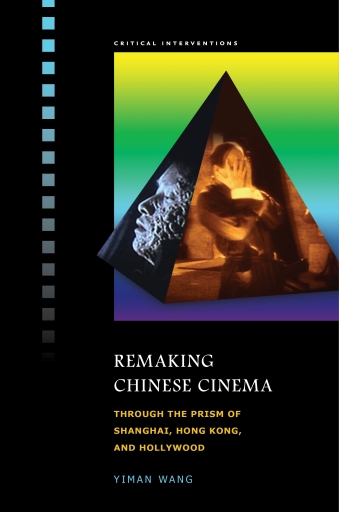
Remaking Chinese Cinema
Por Wang, Yiman
Publicado por University of Hawaii Press
English
234 páginas
2013
ISBN 9780824837846
PDF
Buy at Catademic
🇺🇸
 Catademic
🇺🇸
Visitar loja →
Catademic
🇺🇸
Visitar loja →
 Bajalibros Latam
🇺🇸
Visitar loja →
Bajalibros Latam
🇺🇸
Visitar loja →
 Association of University Presses - Tienda FILUNI
🇺🇸
Visitar loja →
Association of University Presses - Tienda FILUNI
🇺🇸
Visitar loja →
 Ebooks Librería Antártica
🇨🇱
Visitar loja →
Ebooks Librería Antártica
🇨🇱
Visitar loja →
 Ebooks Agustin
🇪🇸
Visitar loja →
Ebooks Agustin
🇪🇸
Visitar loja →
 Bajalibros Argentina
🇦🇷
Visitar loja →
Bajalibros Argentina
🇦🇷
Visitar loja →
 Sanborns Ebooks
🇲🇽
Visitar loja →
Sanborns Ebooks
🇲🇽
Visitar loja →
 ebooks Libreria del GAM
🇨🇱
Visitar loja →
ebooks Libreria del GAM
🇨🇱
Visitar loja →
 Bookshop Uruguay
🇺🇾
Visitar loja →
Bookshop Uruguay
🇺🇾
Visitar loja →
 ebookskitapenas
🇬🇹
Visitar loja →
ebookskitapenas
🇬🇹
Visitar loja →
 Ebooks Yenny - El Ateneo
🇦🇷
Visitar loja →
Ebooks Yenny - El Ateneo
🇦🇷
Visitar loja →
 Crisol Ebooks
🇵🇪
Visitar loja →
Crisol Ebooks
🇵🇪
Visitar loja →
Disponível em 12 livrarias
Catademic
🇺🇸
Visitar loja →
Bajalibros Latam
🇺🇸
Visitar loja →
Association of University Presses - Tienda FILUNI
🇺🇸
Visitar loja →
Ebooks Librería Antártica
🇨🇱
Visitar loja →
Ebooks Agustin
🇪🇸
Visitar loja →
Bajalibros Argentina
🇦🇷
Visitar loja →
Sanborns Ebooks
🇲🇽
Visitar loja →
ebooks Libreria del GAM
🇨🇱
Visitar loja →
Bookshop Uruguay
🇺🇾
Visitar loja →
ebookskitapenas
🇬🇹
Visitar loja →
Ebooks Yenny - El Ateneo
🇦🇷
Visitar loja →
Crisol Ebooks
🇵🇪
Visitar loja →
Sobre este livro
<p>From melodrama to Cantonese opera, from silents to 3D animated film,<i> Remaking Chinese Cinema</i> traces cross-Pacific film remaking over the last eight decades. Through the refractive prism of Hollywood, Shanghai, and Hong Kong, Yiman Wang revolutionizes our understanding of Chinese cinema as national cinema. Against the diffusion model of national cinema spreading from a central point—Shanghai in the Chinese case—she argues for a multi-local process of co-constitution and reconstitution. In this spirit, Wang analyzes how southern Chinese cinema <i>(huanan dianying)</i> morphed into Hong Kong cinema through trans-regional and trans-national interactions that also produced a vision of Chinese cinema.<br><br>Among the book’s highlights are a rereading of <i>The Goddess—</i>one of the best-known silent Chinese films in the West—from the perspective of its wartime Mandarin-Cantonese remake; the excavation of a hybrid genre (the Western costume Cantonese opera film) inspired by Hollywood's fantasy films of the 1930s and produced in Hong Kong well into the mid-twentieth century; and a rumination on Hollywood’s remake of Hong Kong’s <i>Infernal Affairs</i> and the wholesale incorporation of “Chinese elements” in <i>Kung Fu Panda 2.</i><br><br>Positing a structural analogy between the utopic vision, the national cinema, and the location-specific collective subject position, the author traces their shared urge to infinitesimally approach, but never fully and finitely reach a projected goal. This energy precipitates the ongoing processes of cross-Pacific film remaking, which constitute a crucial site for imagining and enacting (without absolving) issues of national and regional border politics. These issues unfold in relation to global formations such as colonialism, Cold War ideology, and postcolonial, postsocialist globalization. As such, <i>Remaking Chinese Cinema</i> contributes to the ongoing debate on (trans-)national cinema from the unique perspective of century-long border-crossing film remaking.</p>
Categorias
- Idioma
- English
Compartilhar
Você também pode gostar

Heinrich von Kleist – Ein Gewitterleben
Kluge, Alexander
Imagens do passado
Souza, José Inácio de Melo

Bambi contro Godzilla
Mamet, David

Una película es todo el cine
Di Tella, Andrés
Mallorca filmada
Brotons Capó, Maria Magdalena, Sebastián Sebastián, María

Cien películas que me abrieron la cabeza
Amelio-Ortiz, Nicolás