
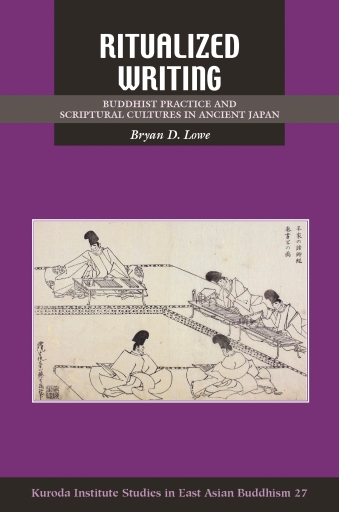
Ritualized Writing
Por Lowe, Bryan D.
Publicado por University of Hawaii Press
English
2017
ISBN 9780824859411
eBook
Buy at Bajalibros Latam
🇺🇸
 Catademic
🇺🇸
Visitar loja →
Catademic
🇺🇸
Visitar loja →
 Bajalibros Latam
🇺🇸
Visitar loja →
Bajalibros Latam
🇺🇸
Visitar loja →
 Association of University Presses - Tienda FILUNI
🇺🇸
Visitar loja →
Association of University Presses - Tienda FILUNI
🇺🇸
Visitar loja →
 Ebooks Librería Antártica
🇨🇱
Visitar loja →
Ebooks Librería Antártica
🇨🇱
Visitar loja →
 Ebooks Agustin
🇪🇸
Visitar loja →
Ebooks Agustin
🇪🇸
Visitar loja →
 Bajalibros Argentina
🇦🇷
Visitar loja →
Bajalibros Argentina
🇦🇷
Visitar loja →
 Sanborns Ebooks
🇲🇽
Visitar loja →
Sanborns Ebooks
🇲🇽
Visitar loja →
 ebooks Libreria del GAM
🇨🇱
Visitar loja →
ebooks Libreria del GAM
🇨🇱
Visitar loja →
 Bookshop Uruguay
🇺🇾
Visitar loja →
Bookshop Uruguay
🇺🇾
Visitar loja →
 ebookskitapenas
🇬🇹
Visitar loja →
ebookskitapenas
🇬🇹
Visitar loja →
 Ebooks Yenny - El Ateneo
🇦🇷
Visitar loja →
Ebooks Yenny - El Ateneo
🇦🇷
Visitar loja →
 Crisol Ebooks
🇵🇪
Visitar loja →
Crisol Ebooks
🇵🇪
Visitar loja →
Disponível em 12 livrarias
Catademic
🇺🇸
Visitar loja →
Bajalibros Latam
🇺🇸
Visitar loja →
Association of University Presses - Tienda FILUNI
🇺🇸
Visitar loja →
Ebooks Librería Antártica
🇨🇱
Visitar loja →
Ebooks Agustin
🇪🇸
Visitar loja →
Bajalibros Argentina
🇦🇷
Visitar loja →
Sanborns Ebooks
🇲🇽
Visitar loja →
ebooks Libreria del GAM
🇨🇱
Visitar loja →
Bookshop Uruguay
🇺🇾
Visitar loja →
ebookskitapenas
🇬🇹
Visitar loja →
Ebooks Yenny - El Ateneo
🇦🇷
Visitar loja →
Crisol Ebooks
🇵🇪
Visitar loja →
Sobre este livro
<p><i>Ritualized Writing</i> takes readers into the fascinating world of Japanese Buddhist manuscript cultures. Using archival sources that have received scant attention in English, primarily documents from an eighth-century Japanese scriptorium and colophons from sutra manuscripts, Bryan D. Lowe uncovers the ways in which the transcription of Buddhist scripture was a highly ritualized endeavor. He takes a ground-level approach by emphasizing the activities and beliefs of a wide range of individuals, including scribes, provincial patrons, and royals, to reassess the meaning of scripture and reevaluate scholarly narratives of Japanese Buddhist history.<br><br>Copying scripture is a central Buddhist practice and one that thrived in East Asia. Despite this, there are no other books dedicated to the topic. This work demonstrates that patrons and scribes treated sutras differently from other modes of writing. Scribes purified their bodies prior to transcription. Patrons held dedicatory ceremonies on days of abstinence, when prayers were pronounced and sutras were recited. Transcribing sutras helped scribes and patrons alike realize this- and other-worldly ambitions and cultivate themselves in accord with Buddhist norms. Sutra copying thus functioned as a form of ritualized writing, a strategic practice that set apart scripture as uniquely efficacious and venerable. <br><br>Lowe employs this notion of ritualized writing to challenge historical narratives about ancient Japan (late seventh through early ninth centuries), a period when sutra copying flourished. He contends that Buddhist practice fulfilled a variety of social, political, and spiritual roles beyond ideological justification. Moreover, he demonstrates the inadequacy of state-folk dichotomies for understanding the social groups, institutions, and individual beliefs and practices of ancient Japanese Buddhism, highlighting instead common organizations across social class and using models that reveal shared concerns among believers from diverse social backgrounds.<br><br><i>Ritualized Writing</i> makes broader contributions to the study of ritual and scripture by introducing the notion of scriptural cultures, an analytic tool that denotes a series of dynamic relationships and practices involving texts that have been strategically set apart or ritualized. Scripture, Lowe concludes, is at once a category created by humans and a body of texts that transforms individuals and social organizations who come into contact with it.</p>
Categorias
- Idioma
- English
Compartilhar
Você também pode gostar
Darwin, Dharma, and the Divine
Godart, G. Clinton
Diary of a Farmer at the Foot of Mt. Kanpū
Yoshida, Saburō
Memory, Music, Manuscripts
Mross, Michaela
The Teaching and Teachings of Temple Buddhism in Contemporary Japan
Covell, Stephen G.
The Book of Five Rings
Miyamoto, Musashi

Le Japon
Montblanc, Comte Charles de