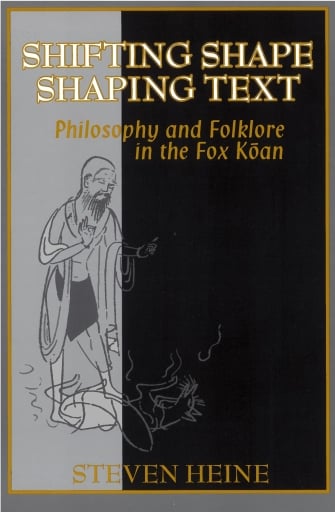
Shifting Shape, Shaping Text
Por Heine, Steven
Publicado por University of Hawaii Press
English
313 páginas
1999
ISBN 9780824864293
PDF
Buy at Catademic
🇺🇸
 Catademic
🇺🇸
Visitar loja →
Catademic
🇺🇸
Visitar loja →
 Bajalibros Latam
🇺🇸
Visitar loja →
Bajalibros Latam
🇺🇸
Visitar loja →
 Association of University Presses - Tienda FILUNI
🇺🇸
Visitar loja →
Association of University Presses - Tienda FILUNI
🇺🇸
Visitar loja →
 Ebooks Librería Antártica
🇨🇱
Visitar loja →
Ebooks Librería Antártica
🇨🇱
Visitar loja →
 Ebooks Agustin
🇪🇸
Visitar loja →
Ebooks Agustin
🇪🇸
Visitar loja →
 Bajalibros Argentina
🇦🇷
Visitar loja →
Bajalibros Argentina
🇦🇷
Visitar loja →
 Sanborns Ebooks
🇲🇽
Visitar loja →
Sanborns Ebooks
🇲🇽
Visitar loja →
 ebooks Libreria del GAM
🇨🇱
Visitar loja →
ebooks Libreria del GAM
🇨🇱
Visitar loja →
 Bookshop Uruguay
🇺🇾
Visitar loja →
Bookshop Uruguay
🇺🇾
Visitar loja →
 ebookskitapenas
🇬🇹
Visitar loja →
ebookskitapenas
🇬🇹
Visitar loja →
 Ebooks Yenny - El Ateneo
🇦🇷
Visitar loja →
Ebooks Yenny - El Ateneo
🇦🇷
Visitar loja →
 Crisol Ebooks
🇵🇪
Visitar loja →
Crisol Ebooks
🇵🇪
Visitar loja →
Disponível em 12 livrarias
Catademic
🇺🇸
Visitar loja →
Bajalibros Latam
🇺🇸
Visitar loja →
Association of University Presses - Tienda FILUNI
🇺🇸
Visitar loja →
Ebooks Librería Antártica
🇨🇱
Visitar loja →
Ebooks Agustin
🇪🇸
Visitar loja →
Bajalibros Argentina
🇦🇷
Visitar loja →
Sanborns Ebooks
🇲🇽
Visitar loja →
ebooks Libreria del GAM
🇨🇱
Visitar loja →
Bookshop Uruguay
🇺🇾
Visitar loja →
ebookskitapenas
🇬🇹
Visitar loja →
Ebooks Yenny - El Ateneo
🇦🇷
Visitar loja →
Crisol Ebooks
🇵🇪
Visitar loja →
Sobre este livro
<p>According to the fox <i>koan,</i> the second case in the <i>Wu-men kuan koan</i> collection, Zen master Pai-chang encounters a fox who claims to be a former abbot punished through endless reincarnations for denying the efficacy of karmic causality. In the end he is liberated by Pai-chang's turning word, which asserts the inexorability of cause-and-effect. Most traditional interpretations of the <i>koan</i> focus on the philosophical issue of causality in relation to earlier Buddhist doctrines, such as dependent origination and emptiness. Dogen, the founder of the Japanese Soto school, devoted two fascicles of the Shobogenzo exclusively to the fox <i>koan.</i> One fascicle supports a paradoxical view of causality and non-causality, the two being "two sides of the same coin"; the second strongly attacks this interpretation and defends a literal reading that asserts causality and denies non-causality. Dogen's apparent change of heart on this topic has inspired scholars of the recent Critical Buddhist methodology to evaluate the merits and weaknesses in Zen's attitude toward ethical issues and social affairs.<br><br><i>Shifting Shape, Shaping Text</i> examines the fox <i>koan</i> in relation to philosophical and institutional issues facing the Ch'an/Zen tradition in both Sung China and medieval and contemporary Japan. Steven Heine integrates his own philological analysis of the <i>koan,</i> textual analysis of <i>koan</i> collections and related literary genres in T'ang and Sung China, folklore studies, recent discourse theory, Dogen studies, and research on monastic codes and institutional history to craft an original and compelling work. More specifically, he illuminates a fascinating dimension of the entire Ch'an/Zen tradition as he carefully lays out the philosophical issues in the koan concerning causality/karma and enlightenment, the ethical issues contained therein, the bearing that certain interpretations of causality had on the creation of monastic codes and institutional security in China, the relation between Zen and folk religion as revealed by the <i>koan,</i> and the issue of possible antinomianism in Zen, especially as grappled with by later thinkers such as Dogen and contemporary representatives of Critical Buddhism. Finally he applies theories of "high" and "low" religion and contemporary discourse and in the process rethinks the theories and their applicability across cultures.<br><br>Far-reaching yet rigorous, <i>Shifting Shape, Shaping Text</i> will not only attract the interest of Ch'an/Zen specialists, but also those studying folklore, popular religion, and issues concerning the nature of discourse and the relation between "high" and "low" religions.</p>
Categorias
- Idioma
- English
Compartilhar