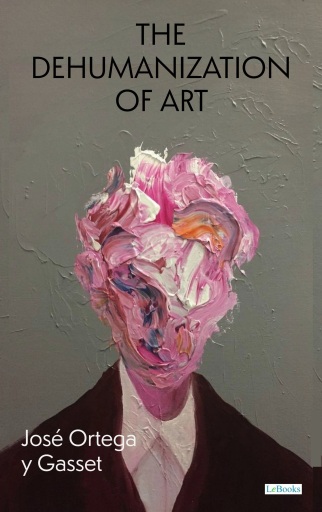
The Dehumanization of Art
Publicado por Lebooks Editora
English
2025
ISBN 9786558947363
eBook
Buy at Bajalibros Latam
🇺🇸
Bajalibros Latam
🇺🇸
Visitar loja →
Martins Fontes Paulista
🇧🇷
Visitar loja →

Disal - Distribuidora de Conhecimento
🇧🇷
Visitar loja →
Ebooks Librería Antártica
🇨🇱
Visitar loja →
Bajalibros Argentina
🇦🇷
Visitar loja →
Sanborns Ebooks
🇲🇽
Visitar loja →
ebooks Libreria del GAM
🇺🇾
Visitar loja →
Bookshop Uruguay
🇺🇾
Visitar loja →
Ebooks Yenny - El Ateneo
🇦🇷
Visitar loja →
Crisol Ebooks
🇨🇴
Visitar loja →
Disponível em 10 livrarias
Martins Fontes Paulista
🇧🇷
Visitar loja →

Disal - Distribuidora de Conhecimento
🇧🇷
Visitar loja →
Ebooks Librería Antártica
🇨🇱
Visitar loja →
Sanborns Ebooks
🇲🇽
Visitar loja →
ebooks Libreria del GAM
🇺🇾
Visitar loja →
Ebooks Yenny - El Ateneo
🇦🇷
Visitar loja →
Crisol Ebooks
🇨🇴
Visitar loja →
Sobre este livro
The Dehumanization of Art, published in 1925 by José Ortega y Gasset, is a seminal essay that explores the nature and purpose of modern art. Ortega examines the radical transformation of artistic expression in the early twentieth century, arguing that contemporary art deliberately distances itself from traditional human emotions and realism. Rather than seeking to represent life or evoke empathy, modern art turns toward abstraction, intellect, and form — an art that is "dehumanized."
For Ortega, this "dehumanization" does not imply a rejection of humanity but a shift in focus: art ceases to mirror the external world or individual sentiment and instead becomes an autonomous creation of forms, colors, and ideas. The artist no longer aims to move the spectator emotionally but to engage them intellectually. This change, Ortega suggests, explains why many people feel alienated from modern art — it demands a cultivated sensitivity and an active, analytical participation rather than passive enjoyment.
The essay also explores the elitist dimension of modern art. Ortega argues that its complexity and abstraction naturally divide audiences: only those who can appreciate its intellectual and aesthetic play are truly able to grasp it. This is not a flaw but a characteristic of a new age in which art serves as a form of cultural refinement rather than mass entertainment. By rejecting sentimentalism and direct representation, modern art reflects a mature, self-conscious civilization that values reflection over emotion.
José Ortega y Gasset was a Spanish philosopher and essayist, widely regarded as one of the most influential intellectual figures of 20th-century Spain. His work is characterized by a profound reflection on culture, reason, and human life, proposing a vitalist philosophy that sought to renew European thought from a distinctly Hispanic perspective.
Categorias
- Idioma
- English
Compartilhar
Você também pode gostar
El ser, Dios y la ciencia
Carlos Augusto Casanova G.
Construyendo un sujeto criminal
Marcos Antonio León
Foucault & a Educação
Veiga-Neto, Alfredo
Uma visão cética do mundo
Smith, Plínio Junqueira
Divagações sobre um mundo em crise
Oliveira, Régis Fernandes de
Conciencia histórica y tiempo histórico
Agoglia, Rodolfo Mario