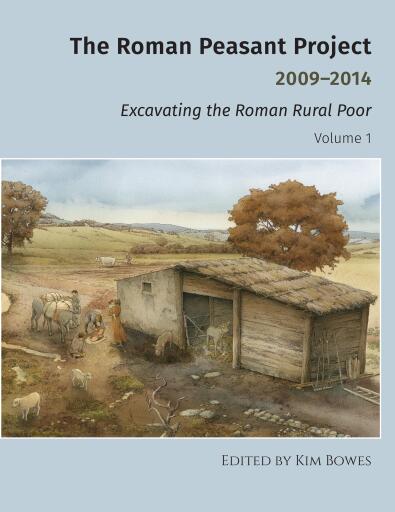
The Roman Peasant Project 2009-2014
Publicado por University of Pennsylvania Museum
English
814 páginas
2021
ISBN 9781949057089
Tempo de leitura estimado: 14 h 55 min
PDF
Buy at Viubux
🇲🇽
 Alpha Books
🇨🇴
Visitar loja →
Alpha Books
🇨🇴
Visitar loja →
 Bajalibros Argentina
🇦🇷
Visitar loja →
Bajalibros Argentina
🇦🇷
Visitar loja →
 Bajalibros Latam
🇺🇸
Visitar loja →
Bajalibros Latam
🇺🇸
Visitar loja →
 Bookshop Uruguay
🇺🇾
Visitar loja →
Bookshop Uruguay
🇺🇾
Visitar loja →
 Crisol Ebooks
🇵🇪
Visitar loja →
Crisol Ebooks
🇵🇪
Visitar loja →
Disponível em 11 livrarias
Alpha Books
🇨🇴
Visitar loja →
Bajalibros Argentina
🇦🇷
Visitar loja →
Bajalibros Latam
🇺🇸
Visitar loja →
Bookshop Uruguay
🇺🇾
Visitar loja →
Crisol Ebooks
🇵🇪
Visitar loja →






Sobre este livro
This book presents the results of the first systematic archaeological study of Roman peasants. It examines the spaces, architecture, diet, agriculture, market interactions, and movement habitus of non-elite rural dwellers in a region of southern Tuscany, Italy, during the Roman period. Volume 1 presents the excavation data from eight non-elite rural sites including a farm, a peasant house, animal stall/work huts, a ceramics factory, field drains, and a site of uncertain function, here framed as individual chapters complete with finds analysis. Volume 2 examines this data synthetically in thematic chapters addressing land use, agriculture, diet, markets, and movement. The results suggest a different, more sophisticated Roman peasant than heretofore assumed. The data suggests that Roman peasants particularly in the first century BC/AD built specialized sites distributed throughout the landscape to maximize use of diverse land parcels. This has important implications for the interpretation of field survey data, the estimate of rural demographics from that survey, and assumptions about the long-term changes to human settlement. It also points to an important moment of agricultural intensification in this period, a contention beginning to be supported by other studies. The project also identified sophisticated systems of land use, including crop rotation and an important investment in animal agriculture. This work presents the first systematic data from Roman Italy for rural consumption, tracking the fine wares made at a production site to local sites nearby. This supports the largely theoretical problematizing of the so-called consumer city model and suggests the potential importance of rural aggregate demand. Movement studies, based on finds from the sites themselves, describe a more mobile population than anticipated, engaged in quotidian and long-distance movement patterns, supported by the small but steady stream of imports and exports into and out of this seemingly liminal region. The book concludes by addressing the implications of this new data for major questions in Roman social and economic history.
Disponibilidade
The Roman Peasant Project 2009-2014 está disponível como PDF em 11 livrarias online. Entre as livrarias que o vendem estão Alpha Books, Bajalibros Argentina, Bajalibros Latam.
Categorias
- Idioma
- English
Compartilhar
Perguntas frequentes
- Em quais formatos The Roman Peasant Project 2009-2014 está disponível?
- The Roman Peasant Project 2009-2014 está disponível como PDF em 11 livrarias online.
- Onde posso comprar The Roman Peasant Project 2009-2014?
- Você pode comprar The Roman Peasant Project 2009-2014 em Alpha Books, Bajalibros Argentina, Bajalibros Latam. Compare todas as opções na lista desta página.
- Quanto tempo leva para ler The Roman Peasant Project 2009-2014?
- Em um ritmo médio de leitura, The Roman Peasant Project 2009-2014 leva cerca de 14 h 55 min para ser lido (814 páginas).
Avaliações e resenhas
Ainda não há avaliações. Seja o primeiro a resenhar este livro.
Entrar para avaliar e resenhar este livro.