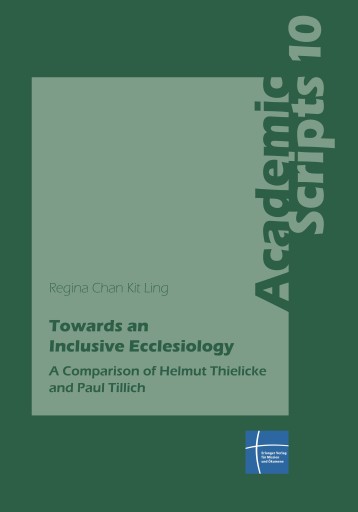
Towards an Inclusive Ecclesiology
Publicado por Erlanger Verlag
English
360 páginas
2024
ISBN 9783872146335
PDF
Buy at LORANCHBOOKSTORE
🇺🇸
 Bajalibros Latam
🇺🇸
Visitar loja →
Bajalibros Latam
🇺🇸
Visitar loja →
 LORANCHBOOKSTORE
🇺🇸
Visitar loja →
LORANCHBOOKSTORE
🇺🇸
Visitar loja →
 Libros Patagonia
🇨🇱
Visitar loja →
Libros Patagonia
🇨🇱
Visitar loja →
 Ebooks Librería Carlos Fuentes
🇲🇽
Visitar loja →
Ebooks Librería Carlos Fuentes
🇲🇽
Visitar loja →
 Ebooks Librería Antártica
🇨🇱
Visitar loja →
Ebooks Librería Antártica
🇨🇱
Visitar loja →
 Ebooks Happy Books
🇨🇴
Visitar loja →
Ebooks Happy Books
🇨🇴
Visitar loja →
 ebooks libreria española
🇪🇨
Visitar loja →
ebooks libreria española
🇪🇨
Visitar loja →
 Bajalibros Argentina
🇦🇷
Visitar loja →
Bajalibros Argentina
🇦🇷
Visitar loja →
 Alpha Books
🇨🇴
Visitar loja →
Alpha Books
🇨🇴
Visitar loja →
 Sanborns Ebooks
🇲🇽
Visitar loja →
Sanborns Ebooks
🇲🇽
Visitar loja →
 ebooks Libreria del GAM
🇨🇱
Visitar loja →
ebooks Libreria del GAM
🇨🇱
Visitar loja →
 Bookshop Uruguay
🇺🇾
Visitar loja →
Bookshop Uruguay
🇺🇾
Visitar loja →
 Ebooks Yenny - El Ateneo
🇦🇷
Visitar loja →
Ebooks Yenny - El Ateneo
🇦🇷
Visitar loja →
 Crisol Ebooks
🇵🇪
Visitar loja →
Crisol Ebooks
🇵🇪
Visitar loja →
Disponível em 14 livrarias
Bajalibros Latam
🇺🇸
Visitar loja →
LORANCHBOOKSTORE
🇺🇸
Visitar loja →
Libros Patagonia
🇨🇱
Visitar loja →
Ebooks Librería Carlos Fuentes
🇲🇽
Visitar loja →
Ebooks Librería Antártica
🇨🇱
Visitar loja →
Ebooks Happy Books
🇨🇴
Visitar loja →
ebooks libreria española
🇪🇨
Visitar loja →
Bajalibros Argentina
🇦🇷
Visitar loja →
Alpha Books
🇨🇴
Visitar loja →
Sanborns Ebooks
🇲🇽
Visitar loja →
ebooks Libreria del GAM
🇨🇱
Visitar loja →
Bookshop Uruguay
🇺🇾
Visitar loja →
Ebooks Yenny - El Ateneo
🇦🇷
Visitar loja →
Crisol Ebooks
🇵🇪
Visitar loja →
Sobre este livro
What makes a church the church? This question has been well answered in the Lutheran tradition. However, as the living embodiment of Christ's promised Word and grace, we must constantly reflect on what the church's existence means and how it relates to the contemporary world. We investigate this subject by comparing the ecclesiologies of Helmut Thielicke and Paul Tillich. Their theologies have their roots in the Lutheran heritage, but they built their ecclesiologies respectively upon the Christocentric and Pneumatological approaches. Throughout the study, we affirm that a comprehensive understanding of "what is the church?" should have an inclusion of its spiritual, essential, invisible essence and its social, existential, visible embodiment. Starting from this ontological basis, we discuss several ecclesiological issues, including the ecclesia-social relationship and participation, the church's role as a salvation mediation, and a good ecclesiological approach to the ecumenical movement. As well as this, in the light of the traditional notions of the church's four marks, the difference between Thielicke's and Tillich's approach is highlighted; and from which we consider whether an ecclesiology with the characteristics that universality overwhelms distinctiveness is advisable.
Categorias
- Idioma
- English
Compartilhar