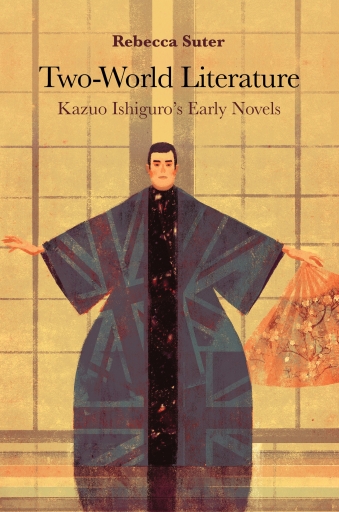
Two-World Literature
Por Suter, Rebecca
Publicado por University of Hawaii Press
English
2020
ISBN 9780824883263
eBook
Buy at ebookstaolistic
🇺🇸
Catademic
🇺🇸
Visitar loja →
UN
University of Hawaiʻi Press
🇺🇸
Visitar loja →
ebookstaolistic
🇺🇸
Visitar loja →
Bajalibros Latam
🇺🇸
Visitar loja →
Association of University Presses - Tienda FILUNI
🇺🇸
Visitar loja →

Ebooks Librería Antártica
🇨🇱
Visitar loja →
Ebooks Agustin
🇪🇸
Visitar loja →
Bajalibros Argentina
🇦🇷
Visitar loja →

Sanborns Ebooks
🇲🇽
Visitar loja →
ebooks Libreria del GAM
🇺🇾
Visitar loja →
Bookshop Uruguay
🇺🇾
Visitar loja →

ebookskitapenas
🇬🇹
Visitar loja →
Ebooks Yenny - El Ateneo
🇦🇷
Visitar loja →
Crisol Ebooks
🇨🇴
Visitar loja →
Disponível em 14 livrarias
Catademic
🇺🇸
Visitar loja →
UN
University of Hawaiʻi Press
🇺🇸
Visitar loja →
ebookstaolistic
🇺🇸
Visitar loja →
Association of University Presses - Tienda FILUNI
🇺🇸
Visitar loja →
Ebooks Librería Antártica
🇨🇱
Visitar loja →
Ebooks Agustin
🇪🇸
Visitar loja →
Sanborns Ebooks
🇲🇽
Visitar loja →
ebooks Libreria del GAM
🇺🇾
Visitar loja →
ebookskitapenas
🇬🇹
Visitar loja →
Ebooks Yenny - El Ateneo
🇦🇷
Visitar loja →
Crisol Ebooks
🇨🇴
Visitar loja →
Sobre este livro
<p>In this study, Rebecca Suter aims to complicate our understanding of world literature by examining the creative and critical deployment of cultural stereotypes in the early novels of Kazuo Ishiguro. “World literature” has come under increasing scrutiny in recent years: Aamir Mufti called it the result of “one-world thinking,” the legacy of an imperial system of cultural mapping from a unified perspective. Suter views Ishiguro’s fiction as an important alternative to this paradigm. Born in Japan, raised in the United Kingdom, and translated into a broad range of languages, Ishiguro has throughout his career consciously used his multiple cultural positioning to produce texts that look at broad human concerns in a significantly different way. Through a close reading of his early narrative strategies, Suter explains how Ishiguro has been able to create a “two-world literature” that addresses universal human concerns and avoids the pitfalls of the single, Western-centric perspective of “one-world vision.”<br><br>Setting his first two novels, <i>A Pale View of Hills</i> (1982) and <i>An Artist of the Floating World</i> (1986), in a Japan explicitly used as a metaphor enabled Ishiguro to parody and subvert Western stereotypes about Japan, and by extension challenge the universality of Western values. This subversion was amplified in his third novel, <i>The Remains of the Day</i> (1989), which is perfectly legible through both English and Japanese cultural paradigms. Building on this subversion of stereotypes, Ishiguro’s early work investigates the complex relationship between social conditioning and agency, showing how characters’ behavior is related to their cultural heritage but cannot be reduced to it. This approach lies at the core of the author’s compelling portrayal of human experience in more recent works, such as <i>Never Let Me Go</i> (2005) and <i>The Buried Giant</i> (2015), which earned Ishiguro a global audience and a Nobel Prize. Deprived of the easy explanations of one-world thinking, readers of Ishiguro’s two-world literature are forced to appreciate the complexity of the interrelation of individual and collective identity, personal and historical memory, and influence and agency to gain a more nuanced, “two-world appreciation” of human experience.</p>
Categorias
- Idioma
- English
Compartilhar
Você também pode gostar
The Boke of Noblesse
Various

Hero-Tales of Ireland
Curtin, Jeremiah
AS YOU LIKE IT
Shakespeare, William, Lee, Sidney
The Complete Works of Joseph Conrad: Novels, Short Stories, Memoirs, Essays & Letters
Conrad, Joseph
Irish in Youngstown and the Greater Mahoning Valley
The Irish American Archival Society
Pride and Prejudice ( A to Z Classics )
Austen, Jane