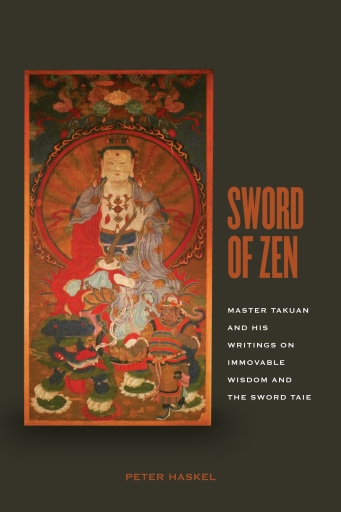
Sword of Zen
Von Haskel, Peter
Herausgegeben von University of Hawaii Press
English
202 Seiten
2012
ISBN 9780824837235
PDF
Buy at Association of University Presses - Tienda FILUNI
🇺🇸
Catademic
🇺🇸
Shop besuchen →
Bajalibros Latam
🇺🇸
Shop besuchen →
Association of University Presses - Tienda FILUNI
🇺🇸
Shop besuchen →

Ebooks Librería Antártica
🇨🇱
Shop besuchen →
Ebooks Agustin
🇪🇸
Shop besuchen →
Bajalibros Argentina
🇦🇷
Shop besuchen →
Sanborns Ebooks
🇲🇽
Shop besuchen →
ebooks Libreria del GAM
🇺🇾
Shop besuchen →
Bookshop Uruguay
🇺🇾
Shop besuchen →
ebookskitapenas
🇬🇹
Shop besuchen →
Ebooks Yenny - El Ateneo
🇦🇷
Shop besuchen →
Crisol Ebooks
🇨🇴
Shop besuchen →
Verfügbar in 12 Buchhandlungen
Catademic
🇺🇸
Shop besuchen →
Association of University Presses - Tienda FILUNI
🇺🇸
Shop besuchen →

Ebooks Librería Antártica
🇨🇱
Shop besuchen →
Ebooks Agustin
🇪🇸
Shop besuchen →
Sanborns Ebooks
🇲🇽
Shop besuchen →
ebooks Libreria del GAM
🇺🇾
Shop besuchen →
ebookskitapenas
🇬🇹
Shop besuchen →
Ebooks Yenny - El Ateneo
🇦🇷
Shop besuchen →
Crisol Ebooks
🇨🇴
Shop besuchen →
Über dieses Buch
<p>Takuan Sōho’s (1573–1645) two works on Zen and swordsmanship are among the most straightforward and lively presentations of Zen ever written and have enjoyed great popularity in both premodern and modern Japan. Although dealing ostensibly with the art of the sword,<i> Record of Immovable Wisdom</i> and<i> On the Sword Taie</i> are basic guides to Zen—“user’s manuals” for Zen mind that show one how to manifest it not only in sword play but from moment to moment in everyday life.<br><br>Along with translations of <i>Record of Immovable Wisdom</i> and<i> On the Sword Taie</i> (the former, composed in all likelihood for the shogun Tokugawa Iemitsu and his fencing master, Yagyū Munenori), this book includes an introduction to Takuan’s distinctive approach to Zen, drawing on excerpts from the master’s other writings. It also offers an accessible overview of the actual role of the sword in Takuan’s day, a period that witnessed both a bloody age of civil warfare and Japan’s final unification under the Tokugawa shoguns. Takuan was arguably the most famous Zen priest of his time, and as a pivotal figure, bridging the Zen of the late medieval and early modern periods, his story (presented in the book’s biographical section) offers a rare picture of Japanese Zen in transition.<br><br>For modern readers, whether practitioners of Zen or the martial arts, Takuan’s emphasis on freedom of mind as the crux of his teaching resonates as powerfully as it did with the samurai and swordsmen of Tokugawa Japan. Scholars will welcome this new, annotated translation of Takuan’s sword-related works as well as the host of detail it provides, illuminating an obscure period in Zen’s history in Japan.</p>
- Sprache
- English
Teilen