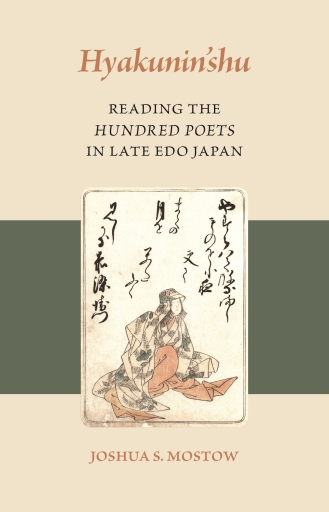
Hyakunin’shu
Publicado por University of Hawaii Press
Inglés
2024
ISBN 9780824897802
eBook
Comprar en ebooks Libreria del GAM
🇨🇱
 Association of University Presses - Tienda FILUNI
🇺🇸
Visitar tienda →
Association of University Presses - Tienda FILUNI
🇺🇸
Visitar tienda →
 Bajalibros Argentina
🇦🇷
Visitar tienda →
Bajalibros Argentina
🇦🇷
Visitar tienda →
 Bajalibros Latam
🇺🇸
Visitar tienda →
Bajalibros Latam
🇺🇸
Visitar tienda →
 Bookshop Uruguay
🇺🇾
Visitar tienda →
Bookshop Uruguay
🇺🇾
Visitar tienda →
 Catademic
🇺🇸
Visitar tienda →
Catademic
🇺🇸
Visitar tienda →
Disponible en 16 librerías
Association of University Presses - Tienda FILUNI
🇺🇸
Visitar tienda →
Bajalibros Argentina
🇦🇷
Visitar tienda →
Bajalibros Latam
🇺🇸
Visitar tienda →
Bookshop Uruguay
🇺🇾
Visitar tienda →
Catademic
🇺🇸
Visitar tienda →











Sobre este libro
Hyakunin’shu: Reading the Hundred Poets in Late Edo Japan explores the “popular literary literacy” of the Japanese at the edge of modernity. By reproducing and translating a well-known annotated and illustrated Ansei-era (1854–1859) edition of the Hyakunin isshu—for hundreds of years the most basic and best-known waka primer in the entire Japanese literary canon—Joshua Mostow reveals how commoners of the time made sense of the collection. Thanks to the popularization of the poems in the early modern period and the advent of commercial publishing, the Hyakunin’shu (as it was commonly called) was no longer the exclusive intellectual property of the upper classes but part of a poetic heritage shared by all literate Japanese.
Mostow traces the Hyakunin’shu’s history from the first published collections in the early sixteenth century and printed commentaries of formerly esoteric and secret exegesis to later editions that include imagined portraits of the poets and, ultimately, pictures of the “heart”—pictorializations of the meaning of the poems themselves. His study illuminates the importance of “variant One Hundred Poets,” such as the Warrior One Hundred Poets, in popularizing the collection and the work’s strong association with feminine education from the early eighteenth century onward. The National Learning (Kokugaku) movement pursued a philological analysis of the poems, leading to translations of the Hyakunin’shu into contemporary, vernacular, spoken Japanese. The poems eventually served as the basis of a card game that became a staple of New Year festivities.
This volume presents some innovations in translating premodern Japanese poetry: in the Introduction, Mostow considers the Hyakunin’shu’s reception during the Edo, when male homoerotic relationships were taken for granted, and makes the case for his translating the love poems in a non-heteronormative way. In addition, the translated poems are lineated to give readers a sense of the original edition’s chirashi-gaki, or “scattered writing,” allowing them to see how each poem’s sematic elements are distributed on the page.
Disponibilidad
Hyakunin’shu está disponible como eBook en 16 librerías online. Entre las librerías que lo venden están Association of University Presses - Tienda FILUNI, Bajalibros Argentina, Bajalibros Latam.
Categorías
- Idioma
- Inglés
Compartir
Preguntas frecuentes
- ¿En qué formatos está disponible Hyakunin’shu?
- Hyakunin’shu está disponible como eBook en 16 librerías online.
- ¿Dónde puedo comprar Hyakunin’shu?
- Puedes comprar Hyakunin’shu en Association of University Presses - Tienda FILUNI, Bajalibros Argentina, Bajalibros Latam. Compara todas las opciones en la lista de esta página.
Valoraciones y reseñas
Aún no hay valoraciones. Sé el primero en reseñar este libro.
Acceder para valorar y reseñar este libro.