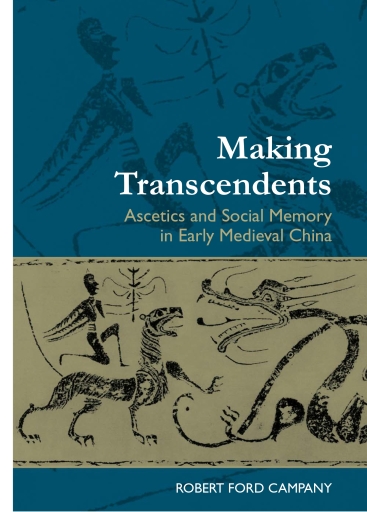
Making Transcendents
Publicado por University of Hawaii Press
Inglés
321 páginas
2009
ISBN 9780824863494
Tiempo de lectura estimado: 5 h 53 min
PDF
Comprar en Sanborns Ebooks
🇲🇽
 Association of University Presses - Tienda FILUNI
🇺🇸
Visitar tienda →
Association of University Presses - Tienda FILUNI
🇺🇸
Visitar tienda →
 Bajalibros Argentina
🇦🇷
Visitar tienda →
Bajalibros Argentina
🇦🇷
Visitar tienda →
 Bajalibros Latam
🇺🇸
Visitar tienda →
Bajalibros Latam
🇺🇸
Visitar tienda →
 Bookshop Uruguay
🇺🇾
Visitar tienda →
Bookshop Uruguay
🇺🇾
Visitar tienda →
 Catademic
🇺🇸
Visitar tienda →
Catademic
🇺🇸
Visitar tienda →
Disponible en 16 librerías
Association of University Presses - Tienda FILUNI
🇺🇸
Visitar tienda →
Bajalibros Argentina
🇦🇷
Visitar tienda →
Bajalibros Latam
🇺🇸
Visitar tienda →
Bookshop Uruguay
🇺🇾
Visitar tienda →
Catademic
🇺🇸
Visitar tienda →











Sobre este libro
Honorable Mention, Joseph Levenson Prize (pre-1900 category), Association for Asian Studies
By the middle of the third century B.C.E. in China there were individuals who sought to become transcendents (xian)—deathless, godlike beings endowed with supernormal powers. This quest for transcendence became a major form of religious expression and helped lay the foundation on which the first Daoist religion was built. Both xian and those who aspired to this exalted status in the centuries leading up to 350 C.E. have traditionally been portrayed as secretive and hermit-like figures. This groundbreaking study offers a very different view of xian-seekers in late classical and early medieval China. It suggests that transcendence did not involve a withdrawal from society but rather should be seen as a religious role situated among other social roles and conceived in contrast to them. Robert Campany argues that the much-discussed secrecy surrounding ascetic disciplines was actually one important way in which practitioners presented themselves to others. He contends, moreover, that many adepts were not socially isolated at all but were much sought after for their power to heal the sick, divine the future, and narrate their exotic experiences.
The book moves from a description of the roles of xian and xian-seekers to an account of how individuals filled these roles, whether by their own agency or by others’—or, often, by both. Campany summarizes the repertoire of features that constituted xian roles and presents a detailed example of what analyses of those cultural repertoires look like. He charts the functions of a basic dialectic in the self-presentations of adepts and examines their narratives and relations with others, including family members and officials. Finally, he looks at hagiographies as attempts to persuade readers as to the identities and reputations of past individuals. His interpretation of these stories allows us to see how reputations were shaped and even co-opted—sometimes quite surprisingly—into the ranks of xian.
Making Transcendents provides a nuanced discussion that draws on a sophisticated grasp of diverse theoretical sources while being thoroughly grounded in traditional Chinese hagiographical, historiographical, and scriptural texts. The picture it presents of the quest for transcendence as a social phenomenon in early medieval China is original and provocative, as is the paradigm it offers for understanding the roles of holy persons in other societies.
Disponibilidad
Making Transcendents está disponible como PDF en 16 librerías online. Entre las librerías que lo venden están Association of University Presses - Tienda FILUNI, Bajalibros Argentina, Bajalibros Latam.
- Idioma
- Inglés
Compartir
Preguntas frecuentes
- ¿En qué formatos está disponible Making Transcendents?
- Making Transcendents está disponible como PDF en 16 librerías online.
- ¿Dónde puedo comprar Making Transcendents?
- Puedes comprar Making Transcendents en Association of University Presses - Tienda FILUNI, Bajalibros Argentina, Bajalibros Latam. Compara todas las opciones en la lista de esta página.
- ¿Cuánto se tarda en leer Making Transcendents?
- A un ritmo de lectura medio, Making Transcendents se lee en unas 5 h 53 min (321 páginas).
Valoraciones y reseñas
Aún no hay valoraciones. Sé el primero en reseñar este libro.
Acceder para valorar y reseñar este libro.